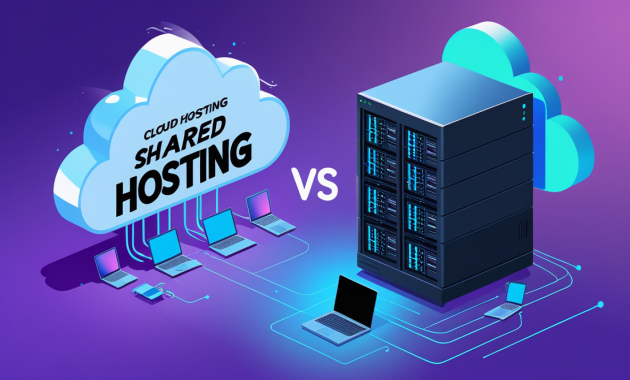
When building a website, choosing the right hosting solution is crucial to your site’s performance, reliability, and overall success. Among the many hosting options available, cloud hosting and shared hosting are two of the most popular choices. But which one is the best fit for your needs? In this article, we’ll break down the key differences, advantages, and disadvantages of both cloud hosting and shared hosting to help you make an informed decision.
What Is Shared Hosting?
Discover related topics
by Indotex DigitalShared hosting is one of the most common and affordable hosting solutions available. With shared hosting, your website shares server resources, such as CPU, RAM, and storage, with other websites hosted on the same server. This setup is like renting a room in a house with other tenants.
Advantages of Shared Hosting:
- Cost-Effective: Shared hosting plans are typically the cheapest, making them ideal for small businesses and personal websites with limited budgets.
- Ease of Use: Most shared hosting plans come with user-friendly control panels, such as cPanel, making it easy for beginners to manage their websites.
- Maintenance-Free: The hosting provider handles server maintenance, updates, and security, so you don’t have to worry about technical tasks.
Disadvantages of Shared Hosting:
- Limited Resources: Since you’re sharing resources with other websites, high traffic on one site can affect the performance of your website.
- Security Risks: Shared servers are more vulnerable to security threats. If one website on the server gets compromised, it can potentially impact all the other sites.
- Scalability Issues: Shared hosting is not ideal for websites that anticipate significant growth or high traffic, as resource limits can restrict scalability.
What Is Cloud Hosting?
Cloud hosting, on the other hand, uses a network of virtual servers hosted in the cloud to distribute resources. Unlike shared hosting, where your website is confined to a single physical server, cloud hosting provides resources from multiple servers, ensuring higher availability and performance.
Advantages of Cloud Hosting:
- Scalability: Cloud hosting allows you to scale resources up or down depending on your website’s needs. This flexibility is perfect for growing businesses or websites with fluctuating traffic.
- Reliability: With data stored across multiple servers, cloud hosting minimizes downtime. If one server fails, another server in the network takes over.
- Performance: Cloud hosting typically offers faster load times and better performance due to its distributed architecture and use of advanced technologies like SSD storage.
- Enhanced Security: Cloud hosting often includes advanced security measures, such as firewalls, DDoS protection, and automated backups, making it more secure than shared hosting.
Disadvantages of Cloud Hosting:
- Cost: Cloud hosting is generally more expensive than shared hosting. The pay-as-you-go model can also result in variable costs depending on resource usage.
- Complexity: Managing cloud hosting may require a steeper learning curve, especially for users who are not tech-savvy.
Key Differences Between Cloud Hosting and Shared Hosting
| Feature | Shared Hosting | Cloud Hosting |
|---|---|---|
| Cost | Low, fixed monthly fees | Higher, pay-as-you-go |
| Performance | Limited, dependent on server load | High, distributed resources ensure better performance |
| Scalability | Limited, upgrading may require a plan change | Highly scalable, adjust resources on demand |
| Reliability | Single server, prone to downtime | Redundant servers, minimal downtime |
| Security | Basic, shared vulnerabilities | Advanced, isolated environments |
| Ease of Use | Beginner-friendly | May require technical expertise |
When to Choose Shared Hosting
Shared hosting is an excellent choice if you:
- Are launching a small website, blog, or portfolio.
- Have a tight budget and need a cost-effective hosting solution.
- Don’t expect high traffic or rapid growth in the near future.
- Prefer a simple and easy-to-manage hosting option.
When to Choose Cloud Hosting
Cloud hosting is the better option if you:
- Run a business or e-commerce website that requires high uptime and fast performance.
- Anticipate traffic spikes or steady growth in traffic.
- Need advanced security features to protect sensitive data.
- Are willing to invest in a scalable and reliable hosting solution.
Final Thoughts
The choice between cloud hosting and shared hosting ultimately depends on your website’s specific needs, budget, and technical expertise. Shared hosting is a cost-effective and beginner-friendly solution for smaller websites with modest requirements. Meanwhile, cloud hosting is ideal for businesses and websites that prioritize scalability, reliability, and performance.
Take the time to evaluate your current and future hosting needs, and consider consulting with your hosting provider to choose the best solution for your website. By making the right choice, you’ll set your website up for long-term success.