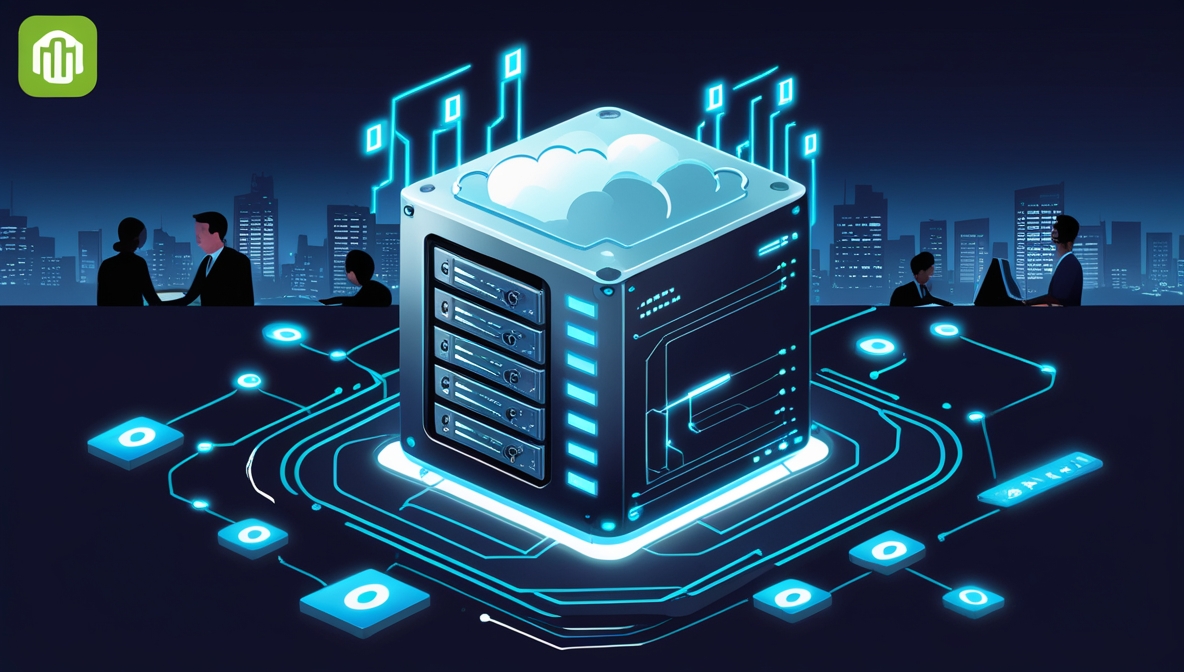
Cloud Server: The Key to Modern Business Growth and Web Hosting – In the digital age we live in now, speed, reliability, and scalability are the keys to running a successful online business. Traditional hosting approaches can’t keep up with the expanding needs of people who host websites, run apps, or manage data. Cloud servers are the answer. They give businesses a flexible, high-performance, and cost-effective way to do things.
Discover related topics
by Indotex DigitalWe will talk about what cloud servers are, how they work, their benefits, and why they are the best choice for organizations in 2025 and beyond in this post.
What is a server in the cloud?
A cloud server is a virtual server that works in a cloud computing environment. Cloud servers get their resources from a huge network of connected physical servers that are spread out over many places, unlike traditional physical servers that are all in one data center.
To put it simply, your website or app isn’t stored on just one computer; it’s hosted on many servers. This way, if one server goes down, another one takes over right away. This means that cloud servers are more stable, scalable, and speedier than regular hosting.
How Cloud Servers Work
Virtualization technology makes cloud servers work. A hypervisor is a software layer that splits a real server into several virtual servers. Each virtual server runs its own operating system and apps, so they don’t depend on each other.
When someone asks to open your website, for example, the cloud system automatically chooses the optimal server to handle the request depending on load, distance, and resource availability. This makes sure that the system runs at its best and is always available.
It’s like having a group of strong computers work together to share the load so that your website or app never fails or slows down.
1. Cloud servers are the best at scaling up and down.
You may quickly increase or decrease the amount of CPU, RAM, or storage on cloud servers. You may change your resources without downtime or having to do it by hand, whether you’re seeing spikes in traffic or seasonal demand.
2. Speed and Performance at a High Level
Cloud servers use SSD storage, efficient caching, and data centers all around the world to make sure they work really quickly. You get a steady speed no matter how busy the server gets because resources aren’t shared like they are with traditional hosting.
3. Dependability and Uptime
Businesses can lose thousands of dollars every minute when they are down. Cloud servers have 99.99% uptime because they spread workloads over many servers. If one fails, the other takes over automatically.
4. Cost-Effectiveness
You just pay for what you use. Cloud servers employ a pay-as-you-go pricing approach, which means you don’t waste money on resources you don’t need. This makes them perfect for new businesses and businesses that need things that change.
5. Better Safety
Most cloud server providers offer strong security features including firewalls, data encryption, intrusion detection, and automatic backups. Your data is stored in safe places, which lowers the chance of losing it or having it stolen.
Different kinds of cloud servers
1. Server on the Public Cloud
A third-party provider, such as Amazon Web Services (AWS), Google Cloud, or Microsoft Azure, hosts and manages it. These servers use the same infrastructure but keep their data separate. It’s a cheap and very scalable solution.
2. A server in the private cloud
Only for one organization. This approach gives businesses more control and protection, which is great for banks, healthcare providers, and other businesses that deal with sensitive data.
3. Cloud Server that is a mix of public and private
This combines both public and private clouds so that data and apps can flow across them. This gives companies the ability to regulate their costs while yet being flexible.
Cloud Server vs. Regular Server Features Cloud Server vs. Traditional Server: Scalability Scalable right away Performance is limited by the hardware’s capacity. Global network and high-speed SSDs Dependent on hardware in the area
Pay-as-you-go cost model Cost that doesn’t change (hardware and upkeep)
99.99% uptime and redundancy Likely to go down
Safety Protection for businesses Needs to be set up by hand
Taking care of Automatically taken care of Needs to be taken care of by hand
Cloud servers are better than traditional servers in almost every way, especially for enterprises that need uptime and flexibility.
Best Cloud Server Providers in 2025
1. AWS, or Amazon Web Services
The top company in the field, offering a wide range of services, including computing and storage, machine learning, and AI tools. Great for businesses and developers.
2. The Google Cloud Platform (GCP)
Famous for its quickness, ability to grow, and interaction with AI. Great for firms that are data-driven and developers.
3. Azure from Microsoft
A good option for businesses that use Windows-based systems. It’s perfect for hybrid cloud installations.
4. DigitalOcean
Developers and small businesses love it since it’s easy to use, cheap, and has features that are easy for developers to use.
5. Vultr
Cloud hosting that is cheap but strong, with data centers all over the world. This is an excellent option for freelancers and new businesses.
How Cloud Servers Help Businesses
1. Better SEO and website speed
Search engines like websites that load quickly and are reliable. Cloud servers help your site rank higher on Google by lowering latency and increasing uptime.
2. A better experience for customers
Users are pleased when websites and apps load faster. Cloud servers lower bounce rates and raise conversions since they load very instantly.
3. Reach around the world
You can serve consumers from any part of the world without lag because your data centers are located all over the world. This is a big plus for eCommerce and SaaS businesses.
4. Keeping the business going
Automatic backups and redundancy make sure that your data and website are safe and accessible even if one server goes down.
5. Operations that are good for the environment
Cloud computing uses resources more efficiently, which means it wastes less energy than keeping separate physical servers.
How to Set Up a Cloud Server
You might not think so, but setting up a cloud server is easier than you think. This is a simple step-by-step guide:
- Pick a cloud service provider, like AWS, Google Cloud, or DigitalOcean.
- Choose your plan based on how much storage, bandwidth, and CPU you require.
- Deploy your virtual machine (VM) in just a few clicks most of the time.
- Put your operating system on your computer (Linux, Windows, etc.).
- Set up firewalls, SSL, and backups as part of your security settings.
- Put your website or app online.
- In just a few minutes, you’ll have a server that can handle any job.
How Much Do Cloud Servers Cost?
The price depends on the supplier and how you set it up. This is a rough guess for 2025:
- $5 to $20 a month for a small website or server
- For a medium-sized firm, the site costs $40 to $100 a month.
- Server for businesses: $200 or more a month
- Pay-as-you-go pricing lets you just pay for what you use, which makes it a better investment than keeping real hardware.
The Future of Cloud Servers
The cloud hosting business is changing quickly all the time. Some new things that will happen in the future are:
- AI-powered optimization: Automatically predicting and handling server loads.
- Edge computing is when data is processed closer to people to make things work faster.
- Green data centers use only renewable energy.
- Quantum cloud servers: Expected to change the way computers work.
- Companies that use cloud technology now are setting themselves up for growth and long-term success.
Final Thoughts
Cloud servers are at the cutting edge of innovation in a world where speed, reliability, and flexibility are what make online businesses successful. They are the perfect mix of power and price, which lets organizations develop without having to worry about hardware limits.
A cloud server can give you the speed, flexibility, and security you need to stay ahead, whether you’re running a small business, an online store, or an enterprise-level program.
Now is the time to embrace the cloud revolution if you want to make sure your digital presence lasts.
Questions and Answers
1. What is the biggest benefit of a cloud server?
It is more scalable, reliable, and cost-effective than regular servers.
2. Is a cloud server a good choice for small businesses?
Yes, a lot of companies offer cloud plans that start at about $5 a month.
3. Is it possible to put my website on a cloud server?
For sure! Websites, apps, and databases all work best on cloud servers.
4. How safe is a server in the cloud?
Cloud servers are quite safe since they have encryption, firewalls, and automatic backups.
5. What is the difference between a VPS and a cloud server?
VPS hosting just uses one physical server, whereas cloud server hosting employs numerous servers that are connected over the cloud to make them more scalable and reliable.