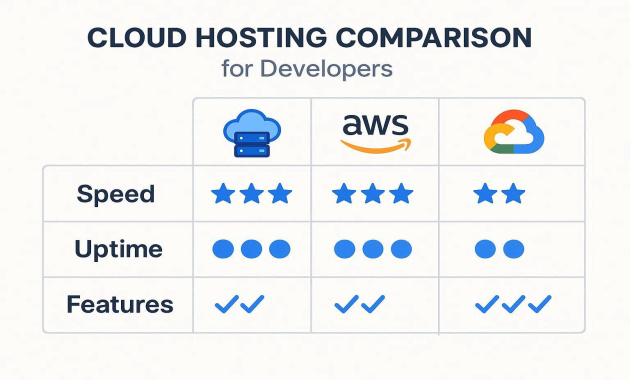
In the fast-paced world of software development, choosing the right cloud hosting provider is critical for ensuring optimal performance, reliability, and scalability of applications. With an array of cloud hosting services available, developers often find themselves grappling with questions about which provider offers the best combination of speed, uptime, and features. This article aims to compare leading cloud hosting providers to help developers make informed decisions based on their specific needs.
Key Factors to Consider in Cloud Hosting
Discover related topics
by Indotex DigitalBefore diving into specific providers, it’s essential to understand the three key factors that developers prioritize when selecting a cloud hosting platform:
- Speed: The responsiveness of a hosting environment directly impacts application performance. High-speed hosting reduces latency and improves user experience.
- Uptime: Reliability is crucial for ensuring applications remain accessible. Providers often guarantee uptime through Service Level Agreements (SLAs).
- Features: The availability of tools, integrations, and developer-centric features can significantly enhance productivity and streamline workflows.
Comparing Leading Cloud Hosting Providers
Let’s explore how top cloud hosting providers stack up against each other in terms of speed, uptime, and features.
1. Amazon Web Services (AWS)
Speed: AWS is known for its global network of data centers, enabling low latency and high-speed performance. With edge locations spread across the globe, AWS optimizes content delivery and reduces delays.
Uptime: AWS guarantees a 99.99% uptime for most of its services. Its robust infrastructure ensures high availability, and multi-region deployments can further enhance reliability.
Features: AWS offers a comprehensive suite of tools, including EC2 for compute, S3 for storage, and Lambda for serverless computing. Its flexibility and extensive documentation make it a favorite among developers.
2. Google Cloud Platform (GCP)
Speed: GCP leverages Google’s high-speed global network, ensuring excellent performance. The platform’s Cloud CDN accelerates content delivery by caching resources at strategically located edge points.
Uptime: GCP provides a 99.95% uptime SLA, backed by a robust and redundant infrastructure. Its multi-zone and multi-region deployment options enhance fault tolerance.
Features: Known for its AI and machine learning capabilities, GCP offers tools like BigQuery and TensorFlow integrations. The platform also provides Kubernetes Engine for seamless container orchestration.
3. Microsoft Azure
Speed: Azure’s expansive global network ensures low-latency connections. The platform’s Content Delivery Network (CDN) further boosts application speed by caching data at edge locations.
Uptime: Azure offers a 99.99% uptime SLA for most of its services. Its multi-layered architecture and disaster recovery options provide exceptional reliability.
Features: Azure excels in hybrid cloud solutions and seamless integrations with Microsoft’s ecosystem, including tools like Visual Studio and Power BI. It’s a go-to choice for enterprises heavily invested in Microsoft technologies.
4. DigitalOcean
Speed: DigitalOcean’s droplet-based infrastructure is optimized for simplicity and speed. Its global data centers ensure low latency for developers targeting specific regions.
Uptime: DigitalOcean guarantees a 99.99% uptime SLA, with a focus on delivering a stable hosting environment. Its transparent status monitoring builds trust among users.
Features: Known for its developer-friendly approach, DigitalOcean offers one-click application installations, API access, and tutorials tailored for developers.
5. Linode
Speed: Linode’s high-performance SSD storage and global data centers ensure fast and reliable hosting. It’s particularly favored by small to medium-sized applications.
Uptime: Linode provides a 99.99% uptime SLA and prioritizes infrastructure redundancy to minimize downtime.
Features: Linode offers straightforward pricing, developer-centric tools, and extensive documentation. It’s a budget-friendly option without compromising on quality.
6. Vultr
Speed: Vultr’s NVMe SSD storage and optimized compute instances deliver impressive speeds. Its global presence ensures low-latency performance.
Uptime: Vultr’s 99.99% uptime SLA ensures reliable hosting. The platform emphasizes consistency and minimal disruptions.
Features: Vultr’s scalable solutions, including block storage and dedicated instances, cater to developers seeking flexible options. It also supports custom ISO uploads for tailored environments.
Specialized Use Cases
Each cloud hosting provider has unique strengths that cater to specific use cases. Here are some examples:
- Startups and Small Businesses: DigitalOcean and Linode are ideal for developers with tight budgets, thanks to their competitive pricing and straightforward interfaces.
- AI and Machine Learning: Google Cloud’s advanced AI tools make it a preferred choice for developers working on data-intensive projects.
- Enterprise Solutions: Microsoft Azure excels in providing enterprise-grade tools and seamless integrations with existing Microsoft infrastructure.
- High-Traffic Applications: AWS’s scalability and global reach make it an excellent choice for handling large-scale applications.
Pricing Considerations
While evaluating cloud hosting providers, pricing is an important factor. Developers should consider both the initial cost and the scalability options. Here’s a brief comparison:
- AWS: Pay-as-you-go pricing with a free tier for beginners.
- GCP: Transparent pricing with sustained-use discounts.
- Azure: Flexible plans with cost-management tools.
- DigitalOcean: Fixed pricing for predictable costs.
- Linode: Competitive pricing ideal for developers on a budget.
- Vultr: Hourly and monthly billing options for flexibility.
Choosing the Right Provider
The best cloud hosting provider depends on individual needs and priorities:
- Speed: If speed is a top priority, AWS, GCP, and Azure are excellent choices due to their extensive global networks.
- Uptime: All providers in this comparison offer high uptime guarantees, but AWS and Azure’s multi-region capabilities provide additional reliability.
- Features: For developers seeking advanced features, AWS, GCP, and Azure offer comprehensive tools and integrations. Budget-conscious developers may prefer DigitalOcean or Linode.
Conclusion
Choosing the right cloud hosting provider is a critical decision for developers. By focusing on speed, uptime, and features, developers can identify a solution that aligns with their technical and business goals. Whether you prioritize advanced tools, cost-effectiveness, or reliability, there’s a cloud hosting provider tailored to your needs. Evaluate your requirements carefully, and leverage the strengths of each platform to build scalable, high-performing applications.