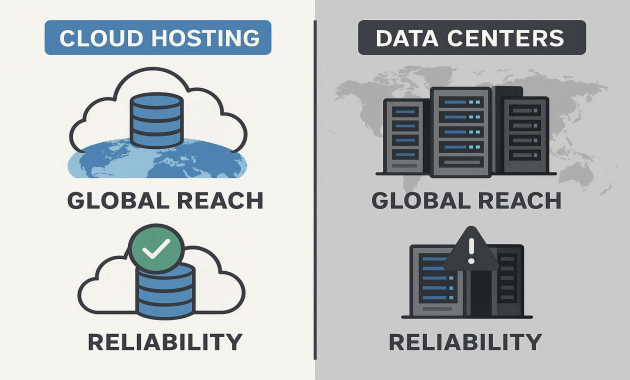
In the digital age, businesses rely heavily on robust cloud hosting solutions to ensure seamless operations, scalability, and optimal performance. A critical factor that determines the efficiency of a cloud hosting provider is the quality and distribution of its data centers. This article delves into the aspects of global reach and reliability in cloud hosting data centers, exploring their significance and how they impact businesses.
The Importance of Cloud Hosting Data Centers
Discover related topics
by Indotex DigitalData centers are the backbone of cloud hosting services. These facilities house servers, storage devices, and networking equipment that collectively deliver cloud computing resources. The geographical location and infrastructure of these data centers directly influence the speed, reliability, and security of cloud services.
For businesses, having access to strategically located data centers means reduced latency, better disaster recovery options, and compliance with regional data regulations. A robust network of data centers also allows companies to serve a global customer base efficiently.
Global Reach: Expanding Horizons
Global reach in cloud hosting refers to the presence of data centers across various regions worldwide. Leading cloud providers, such as Amazon Web Services (AWS), Google Cloud, and Microsoft Azure, have invested heavily in building a global network of data centers. This widespread presence offers several advantages:
- Reduced Latency Latency is the delay between a user’s action and the response from the server. When data centers are closer to end-users, the latency is significantly reduced, ensuring faster load times and smoother interactions. This is particularly crucial for applications like online gaming, video streaming, and real-time financial transactions.
- Localized Services Having data centers in different regions allows cloud providers to offer localized services, including language support and compliance with local data sovereignty laws. This is essential for businesses operating in markets with stringent data regulations, such as the European Union’s General Data Protection Regulation (GDPR).
- Scalability and Availability A global network enables businesses to scale their operations quickly. For instance, an e-commerce platform can handle seasonal spikes in traffic by utilizing additional resources from data centers in other regions.
Reliability: The Pillar of Trust
Reliability is a cornerstone of any cloud hosting service. It encompasses uptime, disaster recovery, and data integrity. The following elements contribute to the reliability of data centers:
- Redundant Systems Reliable data centers incorporate redundant power supplies, cooling systems, and networking equipment. This ensures that services remain operational even in the event of hardware failures.
- Disaster Recovery and Backup Leading cloud providers implement robust disaster recovery mechanisms, including data replication across multiple locations. This minimizes downtime and data loss during natural disasters, cyberattacks, or technical failures.
- Security Protocols Security is integral to reliability. Data centers employ advanced encryption, firewalls, and intrusion detection systems to protect sensitive information. Additionally, physical security measures, such as surveillance cameras and biometric access controls, safeguard the infrastructure.
Comparing Leading Cloud Hosting Providers
Let’s compare the global reach and reliability of three major cloud hosting providers: AWS, Google Cloud, and Microsoft Azure.
- Amazon Web Services (AWS) AWS boasts the largest network of data centers, spanning 30 regions and 96 availability zones as of 2024. This extensive reach ensures low latency and high availability. AWS also offers industry-leading reliability with a 99.99% uptime SLA and comprehensive disaster recovery solutions.
- Google Cloud Google Cloud operates in over 38 regions and continues to expand its footprint. Its global network leverages Google’s private fiber-optic cables, ensuring minimal latency and high-speed connectivity. Google Cloud is known for its robust security measures and innovative machine learning integrations.
- Microsoft Azure Azure’s global presence includes 65+ regions, making it one of the most geographically diverse providers. Azure emphasizes hybrid cloud solutions and integrates seamlessly with Microsoft’s enterprise products. Its reliability is bolstered by a 99.95% uptime SLA and a comprehensive compliance portfolio.
Factors to Consider When Choosing a Cloud Hosting Provider
While global reach and reliability are vital, other factors play a significant role in selecting the right cloud hosting provider:
- Cost Pricing models vary across providers. Businesses should assess their budget and usage patterns to determine the most cost-effective solution.
- Scalability The ability to scale resources up or down based on demand is crucial. Providers like AWS offer auto-scaling features that adapt to changing workloads.
- Support and Service Level Agreements (SLAs) Reliable customer support and clear SLAs are essential for resolving issues promptly and ensuring service continuity.
- Specialized Services Providers offer unique features, such as Google Cloud’s AI tools or Azure’s hybrid cloud capabilities. Businesses should align these offerings with their specific needs.
The Future of Cloud Hosting Data Centers
As technology evolves, data centers are becoming more efficient and sustainable. Innovations like liquid cooling, renewable energy integration, and edge computing are shaping the future of cloud hosting. These advancements aim to reduce the environmental impact of data centers while enhancing performance and reliability.
Moreover, the rise of 5G technology and the Internet of Things (IoT) is driving demand for edge data centers. These facilities bring computing resources closer to end-users, reducing latency and supporting real-time applications.
Conclusion
Global reach and reliability are critical factors in evaluating cloud hosting data centers. Businesses must consider the geographical distribution, infrastructure, and service quality of data centers to make informed decisions. Providers like AWS, Google Cloud, and Microsoft Azure offer robust solutions, each with its unique strengths.
By prioritizing global reach and reliability, companies can ensure seamless operations, enhanced user experiences, and a competitive edge in the digital landscape.