In today’s digital age, data is one of the most valuable assets for businesses and individuals alike. Ensuring that this data is protected from loss due to unforeseen circumstances is a crucial aspect of any hosting solution. Cloud hosting, in particular, has revolutionized the way companies approach data storage, backup, and recovery. Unlike traditional hosting, cloud hosting offers flexible, scalable, and often more secure solutions for managing backups. But with so many cloud hosting providers available, how do they handle data backup and recovery, and what should businesses consider when choosing a provider?
What is Cloud Hosting?
Discover related topics
by Indotex DigitalCloud hosting refers to a type of web hosting service that uses a network of virtual servers, often hosted by a third-party provider, to store data and manage applications. Unlike traditional hosting methods, which rely on a single physical server, cloud hosting leverages the power of multiple servers, allowing data to be distributed across different locations. This approach provides increased reliability, performance, and scalability.
The Importance of Data Backup and Recovery in Cloud Hosting
Data loss is a constant threat to businesses of all sizes. Whether it’s caused by human error, system failure, or cyberattacks, losing critical data can lead to significant financial loss, reputational damage, and even legal issues. As a result, having a solid backup and recovery strategy in place is essential for ensuring business continuity.
Cloud hosting provides an efficient and cost-effective way to handle backups. However, the process of backing up data and ensuring quick and secure recovery can vary greatly between providers. Understanding how different cloud hosting providers approach these aspects is essential for businesses looking to make an informed decision.
Key Features of Cloud Hosting Backup and Recovery
- Automated Backup: One of the key advantages of cloud hosting is the ability to automate data backups. This eliminates the need for manual intervention and ensures that backups are consistently performed without fail. Most cloud hosting providers offer automated backup solutions that can be scheduled according to the business’s needs (e.g., daily, weekly, or monthly).
- Multiple Backup Locations: Cloud hosting providers typically store backups in multiple geographic locations to ensure redundancy and mitigate the risk of data loss due to localized disasters. By spreading data across different regions, cloud hosting services can ensure that even if one data center is compromised, backups remain accessible.
- Scalability: The scalability of cloud hosting allows businesses to expand their backup storage as needed. Since cloud storage can grow or shrink based on usage, businesses only pay for the storage they need at any given time. This makes cloud backup a cost-effective option, especially for businesses with fluctuating data volumes.
- Versioning: Cloud hosting providers often offer versioning features, which allow businesses to keep multiple versions of their data. This means that if a file is corrupted or lost, businesses can easily restore a previous version, minimizing downtime and the impact on operations.
- Security: Data security is paramount in cloud hosting. Leading providers offer encryption both during transit and at rest, ensuring that data is protected from unauthorized access. Additionally, many cloud hosting services include features like two-factor authentication (2FA) and role-based access controls (RBAC) to further safeguard sensitive data.
- Disaster Recovery: Cloud hosting providers offer disaster recovery services to ensure that data can be quickly restored in the event of a disaster. Some providers offer integrated disaster recovery as a service (DRaaS), which includes backup, restoration, and even business continuity planning. This ensures that businesses can quickly recover from any major disruption.
- Restore Speed: The speed at which data can be restored is critical for business continuity. Some cloud hosting providers excel in providing rapid recovery times, ensuring that businesses can get back online as quickly as possible after a data loss incident.
Comparison of Cloud Hosting Providers
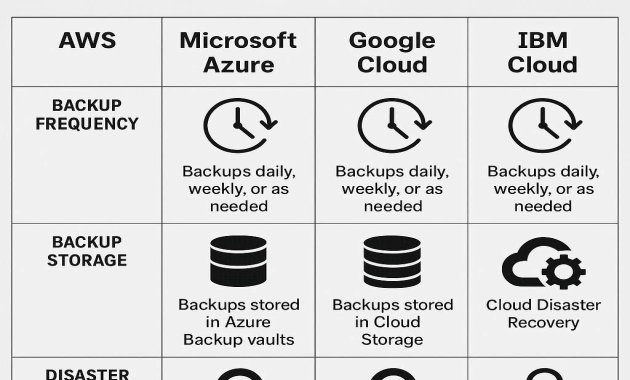
Let’s compare how some of the leading cloud hosting providers handle data backup and recovery:
1. Amazon Web Services (AWS)
AWS is one of the most widely used cloud hosting providers, offering a robust set of backup and recovery features. With AWS, businesses can use services like Amazon S3 for scalable object storage, which can be used for backup purposes. AWS also offers AWS Backup, a fully managed backup service that automates backup tasks for data stored across AWS services.
- Backup: AWS offers automated, scheduled backups with the ability to back up to multiple regions. It supports incremental backups, reducing storage costs and time required for backups.
- Recovery: AWS provides quick restore options and the ability to restore data to any point in time, ensuring businesses can recover with minimal downtime.
2. Google Cloud Platform (GCP)
Google Cloud also offers comprehensive backup and recovery solutions, such as Google Cloud Storage, which can be configured for automated backups. GCP also integrates with services like Google Cloud Backup and DR, offering end-to-end disaster recovery solutions for both virtual machines and databases.
- Backup: GCP offers highly scalable backup solutions with automatic scheduling. Businesses can use Cloud Storage for backups and also leverage Nearline and Coldline storage classes for archival backups.
- Recovery: GCP provides rapid recovery capabilities with options to restore data to multiple points in time. Its disaster recovery solutions offer automated failover and recovery processes, making it an excellent choice for businesses with high uptime requirements.
3. Microsoft Azure
Microsoft Azure is another major cloud hosting provider, offering a wide range of backup and recovery solutions through Azure Backup and Azure Site Recovery. Azure’s backup solution is particularly known for its high availability and seamless integration with existing Microsoft environments, such as Office 365 and Windows Server.
- Backup: Azure offers flexible backup schedules, including daily, weekly, or on-demand backups. The backups are encrypted, both in transit and at rest, to ensure security.
- Recovery: Azure provides point-in-time restore and automated disaster recovery, ensuring that data can be recovered quickly and reliably. Azure also offers geo-redundant backup storage for extra resilience.
4. IBM Cloud
IBM Cloud offers a variety of backup and disaster recovery solutions, including IBM Cloud Backup and IBM Cloud Disaster Recovery. These services provide businesses with scalable and secure backup options, making it suitable for enterprises with large data sets.
- Backup: IBM Cloud supports incremental backups and provides multiple storage options, including on-demand backups for virtual machines and databases.
- Recovery: IBM Cloud provides fast recovery options, including automated recovery workflows for disaster scenarios. It also offers multi-cloud and hybrid cloud backup capabilities, allowing businesses to back up data across different environments.
Choosing the Right Cloud Hosting Provider for Backup and Recovery
When evaluating cloud hosting providers for backup and recovery, businesses should consider several factors:
- Security: Ensure that the provider offers strong encryption and access controls to protect your data.
- Scalability: Consider whether the provider can scale with your business as your data backup needs grow.
- Speed: Look for fast recovery times, as quick data restoration is critical to minimizing downtime.
- Cost: Compare the pricing structures of different providers and choose one that offers the best value for your backup and recovery needs.
- Disaster Recovery Features: If your business requires high availability, choose a provider that offers robust disaster recovery and business continuity planning.
Conclusion
Cloud hosting providers offer a range of backup and recovery solutions, each with its own strengths and unique features. By understanding how each provider handles these critical tasks, businesses can select the best option to meet their needs. Whether you’re looking for automation, security, scalability, or disaster recovery, leading cloud hosting providers like AWS, Google Cloud, Microsoft Azure, and IBM Cloud provide comprehensive solutions to ensure that your data remains safe and accessible, no matter what happens.